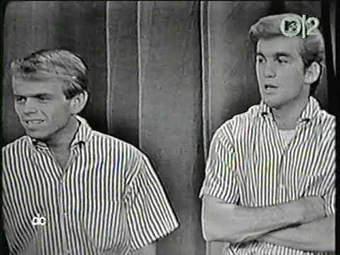
The Untold Story of The Beach Boys: The Rise, Glory, Tragedy, and Lasting Legacy Behind “Don’t Worry Baby”
When people think of California in the 1960s, images of endless beaches, sunshine, surfing, and youthful freedom often come to mind. No band captured that dream more perfectly than The Beach Boys. Yet behind their cheerful harmonies and carefree image lay a story filled with ambition, family conflict, artistic genius, personal struggles, and one of the most influential musical legacies in history. Among their most beloved recordings is Don’t Worry Baby, a song that continues to resonate with listeners decades after its release because of its emotional vulnerability and timeless beauty.
The Beach Boys were formed in Hawthorne, California, in 1961 by brothers Brian Wilson, Dennis Wilson, and Carl Wilson, along with their cousin Mike Love and friend Al Jardine. At a time when rock and roll was evolving rapidly, the group developed a unique sound built around intricate vocal harmonies inspired by doo-wop groups and traditional pop vocal ensembles. Their early songs celebrated surfing, cars, romance, and the youthful lifestyle of Southern California, creating a musical identity that quickly distinguished them from other emerging acts of the era. Hits such as “Surfin’ U.S.A.,” “Fun, Fun, Fun,” and “I Get Around” transformed the group into national stars and made them one of the defining voices of the American music scene during the height of the British Invasion.
However, the true creative force behind the band was Brian Wilson, whose extraordinary musical imagination pushed The Beach Boys far beyond simple surf-rock entertainment. While audiences saw a group singing about beaches and fast cars, Brian was becoming increasingly interested in sophisticated songwriting, orchestration, and emotional depth. His desire to create more meaningful music eventually led to some of the most innovative recordings of the decade. It was during this creative transformation that “Don’t Worry Baby” emerged as one of the band’s greatest achievements. Although released in 1964 rather than 1966, the song became one of the defining emotional statements of The Beach Boys’ golden era. Inspired in part by Ronnie Spector and the production style of Phil Spector, Brian Wilson crafted a song that balanced insecurity and reassurance in a way that was rare in popular music at the time. The lyrics tell the story of a young man worried about proving himself, finding comfort in the support of the woman he loves. Beneath its seemingly simple narrative lies a universal message about fear, vulnerability, and emotional dependence that continues to connect with listeners across generations.
As the 1960s progressed, Brian Wilson’s ambitions grew even larger. While many bands focused on commercial success, he became obsessed with expanding the possibilities of pop music. This quest reached its peak with the landmark album Pet Sounds, now widely regarded as one of the greatest albums ever recorded. At first, the album’s introspective themes and complex arrangements confused some listeners, but its influence would eventually reshape the future of popular music. Even members of The Beatles openly praised the album, with many music historians arguing that it directly inspired the creation of Sgt. Pepper’s Lonely Hearts Club Band. During this period, The Beach Boys were no longer merely a surf band; they had become pioneers pushing the boundaries of what popular music could achieve artistically.
Yet success came at a cost. The pressure of fame, relentless touring, creative disagreements, and personal issues began to take a toll on the group. Brian Wilson, in particular, struggled with severe mental health challenges and increasing isolation. His ambitious project, the unfinished album Smile, became one of the most famous lost masterpieces in music history. Internal conflicts, changing musical trends, and Brian’s declining health contributed to a gradual decline in the band’s commercial dominance during the late 1960s and 1970s. Despite continuing to record and perform, The Beach Boys never fully recaptured the cultural position they had once enjoyed during their peak years.
Tragedy would also strike the Wilson family. Dennis Wilson, known as the group’s charismatic drummer and the only actual surfer among the original members, struggled for years with substance abuse and personal difficulties before drowning in 1983 at the age of 39. Carl Wilson, whose warm voice became one of the band’s defining sounds, passed away from cancer in 1998. Their deaths marked painful chapters in the band’s history and underscored the human struggles hidden behind decades of success and fame.
Despite these hardships, the legacy of The Beach Boys only grew stronger with time. Music critics, historians, and fans increasingly recognized the depth and innovation of their work. Songs once viewed as simple pop records came to be appreciated as masterclasses in songwriting, arrangement, and vocal harmony. Today, “Don’t Worry Baby” remains one of the most beloved songs in the group’s catalog, frequently appearing on lists of the greatest songs ever recorded. Its emotional honesty, beautiful harmonies, and timeless production continue to inspire musicians and move audiences more than half a century after its release.
The story of The Beach Boys is ultimately a story of dreams, genius, family, triumph, and loss. From a group of young friends singing in California to becoming one of the most influential acts in music history, they created a soundtrack that defined an era while simultaneously pushing popular music into new artistic territory. Their journey was far more complex than the sunny image they projected to the world, filled with personal battles and extraordinary achievements that continue to fascinate music lovers today. Long after the waves of the 1960s faded into history, the music of The Beach Boys still echoes across generations, and songs like “Don’t Worry Baby” remain powerful reminders that behind every great harmony lies a deeply human story.