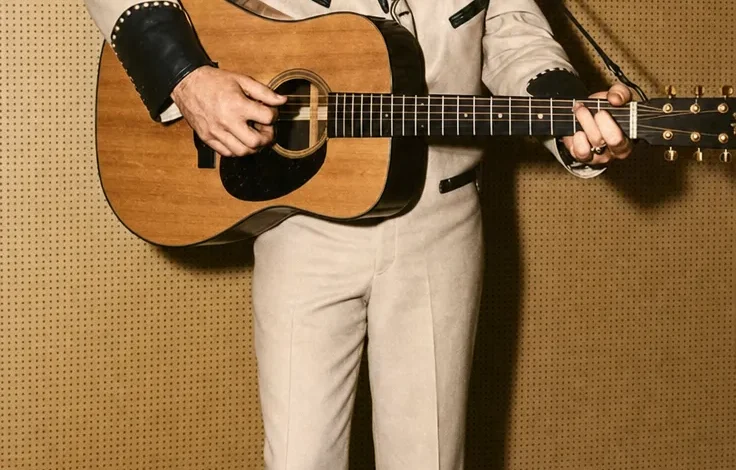
The Webb Pierce Classic That Defined Honky-Tonk Heartbreak
When Webb Pierce released “There Stands the Glass” in 1953, country music was entering one of its greatest eras, and few artists were as dominant as Pierce. His unmistakable voice, emotional delivery, and authentic honky-tonk sound helped make him one of the biggest recording stars of the decade. With “There Stands the Glass,” he delivered a song so honest and relatable that it would become one of the defining heartbreak records in country music history.
Written by Russ Hull, Mary Jean Shurtz, and Autry Greisham, the song tells the story of a man sitting alone, staring at a glass that promises temporary relief from emotional pain. He knows it can’t truly heal his broken heart, yet he can’t stop reaching for it, hoping that just one more drink might dull the memories that refuse to disappear.
It wasn’t a song that glorified drinking.
Instead, it honestly portrayed the desperation that often follows heartbreak. The glass becomes a symbol—not of happiness—but of loneliness, regret, and the human desire to escape painful memories, even if only for a little while. That emotional honesty resonated deeply with audiences who had experienced loss themselves.
Webb Pierce brought the story to life like few singers could.
Born in Louisiana, Pierce possessed one of the most recognizable voices in country music. His high, emotional tenor cut through every lyric with remarkable sincerity. Unlike many singers who relied on dramatic performances, Pierce allowed his natural voice to carry the emotion, making listeners believe every word.
By the early 1950s, he had already become one of country music’s biggest stars.
Over the course of his career, Webb Pierce spent an astonishing 113 weeks at No. 1 on the Billboard country charts—more than almost any artist of his era. His influence helped shape the sound of traditional honky-tonk music, inspiring generations of artists who followed.
The arrangement on “There Stands the Glass” perfectly captures that classic style.
Steel guitar cries softly beneath Pierce’s voice while fiddle, acoustic guitar, upright bass, and restrained rhythm create an intimate atmosphere. Every note serves the story, allowing the emotion to remain front and center. Even decades later, the production still feels timeless because it never tried to follow trends.
When the single reached country radio, it climbed to No. 1 on the Billboard country chart, where it remained for 12 weeks, becoming one of the biggest hits of Webb Pierce’s career. The song solidified his reputation as one of the finest interpreters of heartbreak in country music and helped define the honky-tonk sound that would influence artists for decades.
Today, more than seventy years later, “There Stands the Glass” remains a cornerstone of traditional country music.
Countless singers have covered it, but Webb Pierce’s original recording continues to be regarded as the definitive version. It still finds new audiences because the emotions it explores are timeless—heartbreak, loneliness, and the hope that tomorrow might hurt a little less than today. Perhaps that’s why the song still speaks to so many people. Heartbreak…Doesn’t always shout. Sometimes…It sits quietly…Across the table. Waiting…In a single glass…Filled with memories…You can’t quite leave behind.
Listen to the full song here:
Credits: AaronKeith