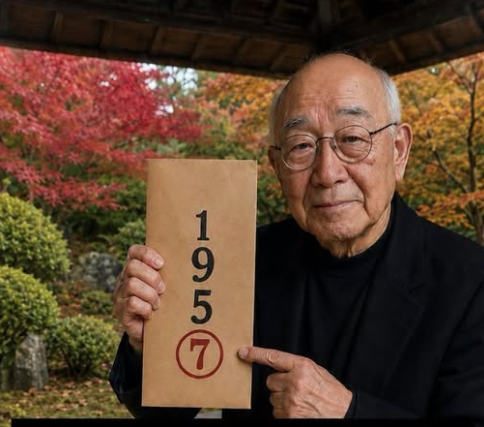
What the Last Digit of Your Birth Year Might Reveal About Your Personality Strengths and Life Lessons
Could the final number of the year you were born offer a playful glimpse into your personality? From natural leaders and thoughtful observers to compassionate caregivers and adventurous spirits, discover the symbolic meanings behind the numbers 0 through 9—and why so many people find these simple interpretations fascinating.
Have you ever met someone for the first time and felt as though you understood them almost immediately? Perhaps they had a quiet confidence that made everyone feel comfortable. Maybe they seemed endlessly curious, always searching for their next adventure. Or perhaps they were the kind of person who naturally took care of everyone else, even when nobody asked them to.
Every individual has a unique combination of qualities, habits, hopes, fears, and experiences. Some people are naturally outspoken, while others prefer observing from a distance. Some seek stability and familiar routines, while others feel most alive when exploring unfamiliar possibilities.
But what if something as simple as the last digit of your birth year could inspire you to think about these different aspects of your personality?
That is the idea behind a popular personality quiz circulating online. It asks one surprisingly simple question: What is the last digit of the year you were born?
You do not need to calculate complicated equations, answer dozens of questions, or know anything about astrology. Simply look at your birth year and identify the final number.
For example, someone born in 1976 would have the number 6. A person born in 1983 would have the number 3. Someone born in 2000 would have the number 0.
According to modern numerology-inspired interpretations, each of these ten numbers carries a symbolic meaning associated with different personality traits, strengths, emotional tendencies, and personal challenges.
Of course, there is an important distinction to understand before exploring these descriptions. There is no reliable scientific evidence that the final digit of a birth year determines someone’s personality, character, or future. These associations are symbolic interpretations intended for entertainment and self-reflection, not scientifically validated personality assessments.
Nevertheless, many people enjoy this type of quiz because the descriptions encourage them to consider their behavior, relationships, and personal growth.
Sometimes, a playful question can lead to a meaningful conversation.
So, take a look at the final digit of your birth year and discover the qualities traditionally associated with your number.
Number 0: The Organized Soul Who Must Learn to Let Go
If your birth year ends in 0, such as 1960, 1970, 1980, 1990, or 2000, your symbolic personality is associated with responsibility, organization, and a strong desire to maintain control over important aspects of life.
You may be someone who feels most comfortable when everything has a clear place and purpose.
While others are willing to make decisions at the last minute, you might prefer having a plan. You enjoy knowing what comes next, understanding your responsibilities, and preparing for potential problems before they happen.
In friendships, relationships, and professional environments, this quality can make you a dependable presence.
People may turn to you when they need practical advice, assistance with complicated arrangements, or reassurance during uncertain situations.
You are the person who remembers important appointments, notices when something has been overlooked, and thinks carefully about the consequences of different decisions.
Your preference for stability is not necessarily a sign that you dislike adventure. Rather, you may enjoy experiences more when you feel adequately prepared for them.
However, the symbolic challenge associated with number 0 is recognizing that life cannot always be organized into predictable categories.
Plans change. People behave unexpectedly. Opportunities sometimes appear without warning.
Even the most carefully prepared person eventually encounters circumstances beyond their control.
Imagine organizing a family celebration. You have arranged the food, prepared the decorations, and created a schedule. Everything seems perfect until the weather changes or an important guest arrives late.
In that moment, you face a choice.
You can become frustrated because reality did not follow your expectations, or you can adapt and appreciate the experience despite its imperfections.
The second approach may not come naturally, but it represents the central lesson of number 0.
Learning to release unnecessary control does not mean abandoning responsibility. It means understanding the difference between what you can influence and what you must accept.
In relationships, this can be particularly important.
You may sometimes feel tempted to solve everyone else’s problems or guide loved ones toward decisions you believe are best.
Yet allowing others to make their own choices can strengthen trust and encourage independence.
The same principle applies to personal growth. Not every chapter of life requires a detailed plan. Occasionally, unexpected changes create opportunities that careful planning could never have anticipated.
Your symbolic strengths: Organization, responsibility, determination, reliability, and practical thinking.
Your life lesson: Peace often begins when you stop trying to control every outcome and learn to trust your ability to handle uncertainty.
Number 1: The Independent Spirit Who Leads the Way
If your birth year ends in 1, such as 1961, 1971, 1981, 1991, or 2001, this interpretation associates you with independence, initiative, confidence, and leadership.
You may be the kind of person who prefers creating opportunities rather than waiting for them.
When faced with a challenge, your first instinct might be to search for a solution. Instead of immediately asking others what to do, you often want to investigate the situation and make your own decision.
This sense of independence can become one of your greatest strengths.
You may feel comfortable taking responsibility, starting projects, or exploring unfamiliar territory without requiring constant reassurance.
In a group, you might naturally become the person who suggests a direction when everyone else is uncertain.
You do not necessarily need an official leadership position to demonstrate leadership qualities. Sometimes, leadership simply means having the courage to take the first step.
For example, imagine a group of friends discussing a community project. Everyone agrees that something should be done, but nobody knows where to begin.
You might be the one who creates a plan, contacts potential volunteers, and turns a conversation into meaningful action.
However, independence can occasionally become excessive self-reliance.
When you are accustomed to handling problems alone, accepting assistance may feel uncomfortable.
You might worry that relying on others will make you appear less capable or that explaining your needs will create unnecessary complications.
Over time, this mindset can become exhausting.
The symbolic lesson for number 1 is understanding that independence and cooperation are not opposites.
Strong leaders recognize the importance of teamwork. Confident people can admit when they do not know something. Responsible individuals understand that sharing responsibilities often produces better outcomes.
In personal relationships, your determination may sometimes be mistaken for stubbornness.
You may have strong opinions and prefer making decisions quickly, while someone close to you needs more time to reflect.
Learning to listen without immediately trying to solve the situation can create deeper emotional connections.
There is also value in recognizing that not every situation requires competition or achievement.
Sometimes, happiness comes from participating rather than leading.
You can remain ambitious while celebrating someone else’s success. You can be confident while acknowledging another person’s perspective.
The real power of independence lies in making conscious choices, including the choice to work alongside others.
Your symbolic strengths: Confidence, initiative, ambition, self-reliance, and leadership.
Your life lesson: True strength includes knowing when to stand alone and when to accept the support of others.
Number 2: The Gentle Peacemaker Who Understands Others
If your birth year ends in 2, such as 1962, 1972, 1982, 1992, or 2002, your number is symbolically linked to empathy, cooperation, emotional awareness, and a desire for harmony.
You may be someone who notices the emotional atmosphere of a room almost immediately.
When someone appears upset, you often sense that something is wrong, even if they insist everything is fine.
You might remember small details about conversations, recognize changes in another person’s mood, or instinctively adjust your approach when someone needs encouragement.
These qualities can help you create strong relationships.
Friends may appreciate your willingness to listen without judgment. Family members might turn to you during disagreements because you understand different perspectives.
You may find satisfaction in helping people resolve misunderstandings rather than allowing conflict to grow.
Consider a situation in which two friends have stopped speaking because of a disagreement.
While others might choose sides, you could be the person who helps both individuals explain their feelings and recognize the intentions behind their words.
Your ability to approach sensitive situations calmly can make you a valuable companion.
However, caring deeply about harmony can sometimes come with a personal cost.
You may avoid difficult conversations because you are afraid of disappointing someone.
Even when you disagree, you might remain silent to protect another person’s feelings.
You may say yes to invitations, responsibilities, or requests despite already feeling overwhelmed.
At first, this behavior can seem like kindness. But constantly putting other people’s comfort ahead of your own can eventually create emotional exhaustion.
The symbolic challenge associated with number 2 is learning that healthy relationships require honesty as well as compassion.
Setting boundaries does not make you selfish.
Expressing disappointment does not mean you are creating unnecessary conflict.
And saying no does not erase the kindness you have shown in the past.
Imagine a friend repeatedly asking you for favors when you are already struggling with responsibilities of your own.
You can care about that friend while explaining that you are unavailable.
A relationship built on mutual respect should allow both people to have needs.
Number 2 also encourages you to remember that disagreement is not always harmful.
Sometimes, respectful conversations about difficult subjects lead to greater understanding.
You do not have to become confrontational to become more assertive.
You simply need to recognize that your opinions deserve consideration.
Your symbolic strengths: Empathy, diplomacy, patience, kindness, and emotional awareness.
Your life lesson: Protecting your own peace matters just as much as helping others find theirs.
Number 3: The Creative Communicator Who Brings Ideas to Life
If your birth year ends in 3, such as 1963, 1973, 1983, 1993, or 2003, this symbolic interpretation connects you with creativity, self-expression, humor, and imagination.
You may enjoy transforming ordinary experiences into interesting stories.
Where someone else sees a simple event, you might notice something surprising, amusing, or meaningful.
You could be naturally attracted to storytelling, writing, music, design, photography, performing, or other activities that allow you to communicate ideas.
Even if you do not consider yourself an artist, creativity may appear in the way you solve everyday problems.
Perhaps you enjoy decorating your home, inventing games for family gatherings, or finding unusual solutions when conventional approaches fail.
People may appreciate your enthusiasm because you make conversations feel lively.
You might be the friend who can turn an awkward silence into laughter or the colleague who introduces a fresh perspective during a difficult discussion.
Your imagination can help others see possibilities they had previously overlooked.
However, the qualities associated with number 3 also contain an important emotional lesson.
Sometimes, people who make others laugh find it difficult to reveal their own sadness.
If you are accustomed to being cheerful, you may feel pressure to maintain that image even when life becomes complicated.
You might use humor to avoid discussing disappointment or change the subject when someone asks about your worries.
While laughter can be a healthy coping mechanism, constantly hiding uncomfortable emotions may prevent others from understanding what you truly need.
Imagine experiencing a difficult week but continuing to entertain everyone around you.
Your friends enjoy your company and assume that you are doing well.
Meanwhile, you quietly wish someone would recognize that you also need encouragement.
The symbolic lesson for number 3 is that authenticity requires room for every emotion, not only the pleasant ones.
You can be imaginative and serious.
You can make people laugh while acknowledging your own concerns.
You can inspire others without pretending that your life is always perfect.
Another challenge may involve focusing your energy.
Creative minds can generate so many exciting ideas that completing existing projects becomes difficult.
You may enthusiastically begin a new hobby, business concept, or artistic project, only to become distracted by another interesting opportunity.
Learning to combine imagination with consistency can help you turn ideas into accomplishments.
Your creativity becomes especially powerful when supported by patience and dedication.
Your symbolic strengths: Imagination, communication, originality, optimism, and artistic expression.
Your life lesson: Your authentic voice matters most when you allow it to express your whole emotional experience.
Number 4: The Dependable Builder Who Never Gives Up
If your birth year ends in 4, such as 1964, 1974, 1984, 1994, or 2004, your number is associated with discipline, responsibility, loyalty, and persistence.
You may be someone who believes that meaningful progress comes through consistent effort.
Rather than expecting immediate results, you understand the importance of patience.
You appreciate practical solutions and may prefer realistic plans over exciting promises that lack substance.
When you commit to something, you usually want to see it through.
This determination can make you particularly dependable in both professional and personal situations.
People may trust you with important responsibilities because they know you take your commitments seriously.
You might be the person who arrives early, completes assignments carefully, and remembers promises others have forgotten.
In relationships, loyalty may be especially meaningful to you.
You could believe that genuine affection is demonstrated through actions rather than words alone.
Preparing a meal, helping with household responsibilities, supporting someone during difficult circumstances, or remaining present when life becomes challenging may be your preferred ways of showing love.
These everyday actions might appear ordinary, but they can provide enormous emotional security.
However, the symbolic challenge of number 4 involves recognizing that dedication should not come at the expense of well-being.
When you place significant value on productivity, relaxation may feel undeserved.
You might struggle to enjoy a day without completing something useful.
Even during holidays, your mind may remain occupied with unfinished tasks.
There is always another responsibility, another project, or another improvement to make.
But human beings are not machines designed for continuous performance.
Rest, recreation, and emotional connection are essential parts of a balanced life.
Imagine spending years working toward a professional milestone.
You sacrifice weekends, postpone vacations, and repeatedly promise yourself that you will relax once the goal is achieved.
Eventually, you reach your destination, only to discover another challenge waiting ahead.
Without consciously creating space for enjoyment, the cycle can continue indefinitely.
The lesson of number 4 is that satisfaction should not always be postponed.
Taking time to appreciate your achievements does not make you less disciplined.
Spending an afternoon with loved ones does not mean you have abandoned your ambitions.
And changing your plans when circumstances demand flexibility is not a personal failure.
Your symbolic strengths: Persistence, discipline, loyalty, reliability, and practical judgment.
Your life lesson: Building a meaningful life requires not only hard work but also time to enjoy what you have created.
Number 5: The Adventurer Who Craves Freedom and Discovery
If your birth year ends in 5, such as 1965, 1975, 1985, 1995, or 2005, your symbolic number is connected to curiosity, adaptability, independence, and adventure.
You may find excitement in the possibility of discovering something unfamiliar.
New places, interesting people, unexpected opportunities, and different ideas can stimulate your imagination.
Routine may occasionally feel restrictive, particularly when every day begins to resemble the one before it.
You might enjoy spontaneous outings, changing your environment, or learning skills simply because they capture your attention.
For you, variety can make life feel vibrant.
You do not necessarily need expensive vacations or dramatic adventures to satisfy your curiosity.
Sometimes, trying a new recipe, exploring a different neighborhood, or beginning an unfamiliar hobby can provide the sense of discovery you enjoy.
You may also be flexible when circumstances change.
While others become frustrated by an interrupted schedule, you might see an opportunity to experiment with a different approach.
This adaptability can be valuable in an unpredictable world.
However, the symbolic challenge for number 5 is recognizing the difference between healthy freedom and constantly avoiding commitment.
When you enjoy novelty, familiar responsibilities may begin to feel uninteresting.
You might find yourself starting projects enthusiastically but struggling to maintain motivation once the initial excitement disappears.
In relationships, you may cherish independence so strongly that ordinary expectations feel limiting.
Yet meaningful connections often require consistency, patience, and mutual commitment.
Freedom does not disappear when you make thoughtful promises.
In fact, certain commitments can create the stability that allows you to explore life with greater confidence.
Consider someone who dreams of traveling extensively.
They may imagine that complete freedom means having no schedule, no obligations, and no long-term plan.
But careful financial preparation, professional stability, and reliable relationships can make their adventures more sustainable.
The same principle applies to emotional growth.
You do not need to choose between a predictable existence and an endlessly changing one.
You can create routines that support your goals while leaving space for unexpected experiences.
Perhaps you reserve certain weekends for exploration while maintaining habits that protect your health, finances, and relationships.
Balance does not have to mean boredom.
Sometimes, stability becomes the foundation that makes adventure possible.
Your symbolic strengths: Curiosity, adaptability, enthusiasm, independence, and openness to experience.
Your life lesson: Lasting freedom becomes easier when you combine exploration with responsibility.
Number 6: The Compassionate Caregiver Who Puts Others First
If your birth year ends in 6, such as 1966, 1976, 1986, 1996, or 2006, your number is symbolically associated with compassion, generosity, loyalty, and nurturing relationships.
You may be someone who feels deeply connected to the well-being of people around you.
When a loved one experiences difficulties, you may instinctively search for ways to help.
You might prepare food for someone who is unwell, offer encouragement to a discouraged friend, or remember to check on a relative who has been feeling lonely.
Small acts of kindness may come naturally to you.
You could place considerable importance on family, friendship, and creating environments where people feel accepted.
Others may appreciate your thoughtful attention because you notice needs that are not always expressed directly.
You might be the person who remembers birthdays, organizes family gatherings, or makes sure nobody feels excluded from an important occasion.
Your generosity may also extend beyond your immediate circle.
Perhaps you enjoy volunteering, helping neighbors, supporting community activities, or caring for animals.
In these symbolic descriptions, number 6 represents the comforting influence of someone who wants others to feel safe and valued.
However, caregiving can become emotionally demanding when it is not balanced with self-care.
You may feel guilty when you cannot help everyone.
You might agree to responsibilities even when your schedule is already full.
Sometimes, you may focus so intensely on other people’s problems that you overlook your own emotional needs.
Imagine a person who spends the entire week assisting family members, supporting friends, and managing household responsibilities.
Whenever someone asks how they are feeling, they respond that everything is fine.
Yet privately, they are exhausted.
They may have forgotten when they last spent time doing something purely for themselves.
The symbolic lesson for number 6 is understanding that kindness should include the person offering it.
You cannot consistently support others while ignoring your own limits.
Rest is not selfish. Personal boundaries are not evidence of indifference.
And asking for help does not mean you have failed as a caregiver.
A healthy relationship allows affection and support to move in both directions.
You deserve encouragement during difficult moments just as much as the people you comfort.
Learning to receive care may feel unfamiliar at first, particularly if others have always relied on your strength.
But allowing someone to support you can create a deeper sense of connection.
Remember that you are valuable not only because of what you do for others, but because of who you are.
Your symbolic strengths: Compassion, generosity, loyalty, patience, and nurturing qualities.
Your life lesson: The kindness you give so freely to others is something you deserve to experience yourself.
Number 7: The Deep Thinker Who Searches for Meaning
If your birth year ends in 7, such as 1967, 1977, 1987, 1997, or 2007, your symbolic personality is linked to reflection, curiosity, analytical thinking, and a desire to understand life’s deeper questions.
You may enjoy examining situations carefully before reaching conclusions.
Rather than accepting information immediately, you prefer understanding how and why something happens.
You might be fascinated by science, history, philosophy, literature, psychology, or subjects that encourage thoughtful exploration.
Your curiosity may extend far beyond formal education.
An ordinary conversation could inspire you to research an unfamiliar concept or reconsider a belief you have held for years.
You may also appreciate quiet environments where you can concentrate without unnecessary distractions.
While some people feel energized by constant social activity, you might require occasional solitude to organize your thoughts.
This does not necessarily mean you dislike people.
Instead, you may prefer meaningful conversations over superficial exchanges.
You might value a small circle of trusted companions rather than maintaining numerous casual relationships.
When someone earns your confidence, your loyalty can be substantial.
You may listen attentively, remember important details, and offer advice based on careful consideration.
However, the symbolic challenge associated with number 7 involves avoiding excessive isolation and overthinking.
When you analyze every possible outcome, decisions can become unnecessarily complicated.
You may delay opportunities because you want complete certainty before acting.
In personal relationships, you might hesitate to express emotions until you fully understand them.
But human connection does not always follow logical patterns.
Sometimes, people need warmth and reassurance rather than carefully constructed explanations.
Imagine a friend sharing a painful experience.
Your natural response may be to identify the cause of the problem and suggest practical solutions.
Yet your friend might simply want someone to listen and acknowledge their feelings.
Learning to recognize these moments can make your relationships more fulfilling.
Number 7 also encourages openness to unfamiliar experiences.
You do not have to understand everything before participating.
A spontaneous invitation, an unexpected friendship, or a new activity might provide valuable insights that reflection alone cannot offer.
Curiosity becomes especially meaningful when combined with real-world experience.
Your thoughtful nature can help you recognize patterns and explore ideas deeply, but life is also meant to be experienced beyond the boundaries of analysis.
Your symbolic strengths: Introspection, curiosity, analytical thinking, wisdom, and observation.
Your life lesson: Understanding life requires both thoughtful reflection and the courage to experience it directly.
Number 8: The Determined Achiever Who Pursues Success
If your birth year ends in 8, such as 1968, 1978, 1988, 1998, or 2008, your symbolic personality is associated with ambition, leadership, perseverance, and a desire to accomplish meaningful goals.
You may be someone who enjoys measuring progress and working toward clear objectives.
Once you decide that something is important, you might dedicate considerable energy to making it happen.
You may appreciate financial independence, professional growth, and opportunities that allow you to develop your abilities.
Challenges can motivate you because they provide a chance to demonstrate determination and resilience.
In professional environments, you may naturally focus on efficiency, results, and long-term planning.
You could be comfortable making difficult decisions when necessary.
Others might admire your ability to remain focused when circumstances become demanding.
However, ambition does not necessarily mean pursuing wealth or professional recognition.
Your goals could involve supporting your family, mastering a skill, completing your education, or creating something that benefits your community.
The essential characteristic associated with number 8 is dedication to achievement.
Still, striving for success can become emotionally complicated.
You may begin measuring your personal worth through results.
A promotion, completed project, or financial milestone might create temporary satisfaction, followed almost immediately by pressure to pursue something greater.
You could compare your progress with that of other people and feel discouraged when their accomplishments appear more impressive.
Social media can intensify this tendency by presenting carefully selected images of success.
But public recognition rarely tells the complete story of someone’s life.
A person may appear successful while struggling with loneliness, exhaustion, or personal uncertainty.
Similarly, someone with modest material possessions may experience deep satisfaction through relationships, meaningful activities, and emotional peace.
The symbolic lesson for number 8 is remembering that achievement is only one part of a fulfilling existence.
Imagine finally reaching a goal that required years of dedication.
You feel proud, but your attention quickly shifts toward another target.
If you never allow yourself to appreciate the present, success can become an endless pursuit rather than a meaningful experience.
Creating balance may involve recognizing smaller victories, spending quality time with loved ones, and maintaining interests unrelated to productivity.
Your ambition can remain strong without controlling every aspect of your identity.
You are more than your job title, income, possessions, or public reputation.
The ability to treat others with kindness, maintain integrity, and enjoy ordinary moments can be just as meaningful as visible accomplishments.
Your symbolic strengths: Ambition, leadership, perseverance, discipline, and determination.
Your life lesson: Achievement can enrich your life, but it should never become the only measure of your worth.
Number 9: The Old Soul Who Carries Wisdom and Compassion
If your birth year ends in 9, such as 1969, 1979, 1989, 1999, or 2009, this symbolic interpretation connects you with emotional depth, empathy, reflection, and a strong appreciation for meaningful experiences.
You may be someone who remembers the emotional significance of past events.
Old photographs, familiar songs, childhood locations, or conversations from many years ago might awaken vivid memories.
You could feel deeply connected to your personal history and the people who have influenced your journey.
Perhaps you enjoy listening to stories from older relatives or reflecting on how previous experiences shaped your perspective.
You might also have a thoughtful approach to relationships.
Rather than being interested only in appearances or temporary excitement, you may value sincerity, understanding, and emotional connection.
Others might describe you as mature, compassionate, or wise beyond your years.
The expression “old soul” is sometimes used for people who seem especially reflective, regardless of their actual age.
In symbolic personality descriptions, number 9 represents someone who recognizes the importance of emotional experiences and personal growth.
However, strong connections to the past can occasionally make it difficult to move forward.
You may find yourself replaying conversations, remembering missed opportunities, or wondering how life might have unfolded if certain decisions had been different.
Perhaps you hold on to old belongings because they remind you of meaningful relationships.
Maybe you struggle to release friendships that have changed or expectations that no longer match your circumstances.
There is nothing wrong with cherishing memories.
The challenge appears when attachment to the past prevents you from recognizing possibilities in the present.
Imagine discovering a box filled with photographs from an earlier chapter of your life.
Looking through them brings feelings of affection, gratitude, and nostalgia.
But it might also remind you of friendships that faded, places you no longer visit, or opportunities that disappeared.
You can appreciate those memories without believing your most meaningful experiences are behind you.
The symbolic lesson for number 9 is learning to honor the past while remaining open to the future.
Forgiveness can also play an important role.
Holding on to resentment may create the feeling that an old experience is still controlling your present life.
Releasing that resentment does not require pretending nothing happened or allowing harmful behavior to continue.
Instead, it may involve deciding that past difficulties no longer deserve unlimited emotional space.
New relationships, discoveries, and opportunities can coexist with treasured memories.
Every stage of life has the potential to teach something valuable.
Your symbolic strengths: Empathy, emotional awareness, compassion, resilience, and reflection.
Your life lesson: Appreciate everything the past has taught you, but leave room for the possibilities still waiting ahead.
Why Do Simple Personality Quizzes Feel So Accurate?
After reading your number’s description, you might have experienced a moment of recognition.
Perhaps you identified strongly with the qualities associated with your birth year.
You may have thought, “That sounds exactly like me.”
Or maybe you found that another number described your personality even better.
Both reactions are common, and psychology offers useful explanations for why broad personality descriptions can feel surprisingly personal.
One concept is known as the Barnum effect, sometimes called the Forer effect.
It describes people’s tendency to view general personality statements as uniquely applicable to themselves, particularly when those statements contain qualities that many people recognize.
For example, consider the following description:
“You enjoy spending time with others, but occasionally need solitude. You care about doing the right thing, although you sometimes doubt your decisions.”
This statement may sound personally meaningful, yet it applies to an enormous range of individuals.
Most people appreciate companionship and occasionally desire privacy.
Many people also experience uncertainty, regardless of how confident they appear.
The descriptions associated with birth-year digits often work in a similar way.
They combine appealing personality strengths with relatable emotional challenges.
A person associated with number 4 may recognize the importance of discipline and rest.
Someone reading about number 6 may identify with the challenge of balancing generosity and self-care.
A person exploring number 7 may remember moments when excessive thinking made decisions difficult.
These experiences are not exclusive to any birth-year category.
They are common aspects of human life.
This does not make the quiz entirely meaningless as an activity.
It simply means that feeling represented by a description does not establish that the number accurately predicts personality.
Another factor is selective attention.
People naturally notice information that matches their existing beliefs and may overlook details that do not fit.
If you already think of yourself as independent, the description for number 1 might seem especially compelling.
You may remember the occasions when you demonstrated leadership while paying less attention to moments when you relied heavily on other people.
This tendency is related to confirmation bias.
Understanding these psychological effects can help you enjoy personality quizzes without placing too much confidence in their accuracy.
Can Your Birth Year Actually Influence Your Personality?
Although the final digit itself has no established predictive power, the broader circumstances surrounding the year someone was born can influence their experiences.
People grow up within particular families, communities, cultures, and historical periods.
Someone raised before smartphones became common may have experienced communication and social relationships differently from a person who grew up with constant internet access.
Economic conditions, educational opportunities, technology, and changing cultural expectations can influence the environments in which people develop.
However, these influences are complex and cannot be reduced to a single number.
Two individuals born in the same year may have remarkably different personalities.
One might be adventurous and outgoing, while the other prefers quiet activities and familiar routines.
Even siblings raised in the same household can develop different interests, values, and ways of responding to challenges.
Personality is shaped by interacting factors, including genetics, environment, life experiences, relationships, and personal development.
Researchers often study personality using established models such as the Big Five, which examines broad dimensions including openness, conscientiousness, extraversion, agreeableness, and neuroticism.
These models are supported by psychological research, although no assessment can capture every detail of an individual’s identity.
In contrast, dividing everyone into ten personality categories based on the final digit of their birth year is an entertainment-oriented approach.
The important distinction is between using numbers for symbolic reflection and treating them as factual explanations of human behavior.
You can enjoy the first without believing the second.
How to Use Your Number as a Tool for Self-Reflection
One of the most interesting ways to approach this quiz is to treat each description as an invitation to ask questions about your own habits.
Instead of wondering whether your number perfectly identifies your personality, consider which characteristics genuinely resemble your behavior.
If your number describes independence, think about whether you enjoy solving problems alone and how comfortable you feel requesting assistance.
If it emphasizes compassion, reflect on whether you regularly prioritize other people’s needs and whether you create enough time for yourself.
If it suggests creativity, consider the activities that allow you to express your imagination.
And if it highlights ambition, think about what success actually means to you.
The descriptions can also encourage conversations between people with different perspectives.
For example, a person who values routine may discover why an adventurous friend enjoys spontaneous decisions.
Someone who prefers quiet reflection may better understand a partner who expresses thoughts through conversation.
These differences do not necessarily create incompatibility.
They can provide opportunities for understanding, cooperation, and appreciation.
However, the number should never become a substitute for genuinely getting to know another person.
It would be unfair to assume that someone born in a year ending in 8 must be materialistic or that someone associated with number 2 will always avoid confrontation.
Human beings are far more complicated than symbolic personality categories.
A thoughtful person can also be adventurous.
A determined leader can be deeply sensitive.
An independent individual may still appreciate emotional support.
And a compassionate caregiver can have strong personal boundaries.
The most useful interpretation is often the one that encourages curiosity rather than judgment.
What Happens When Your Number Doesn’t Match Your Personality?
Not everyone will recognize themselves in the description associated with their birth year.
Perhaps your number is 5, but you strongly prefer routine and rarely enjoy unexpected changes.
Maybe you were born in a year ending in 1, yet you dislike leadership roles and feel most comfortable collaborating with others.
Or perhaps your number is 3, although you consider yourself reserved rather than expressive.
None of these differences suggests there is anything unusual about your personality.
It simply demonstrates the limitations of assigning broad characteristics to people based on arbitrary numerical categories.
You are not required to become the kind of person your number supposedly represents.
Nor should you ignore your actual experiences because a symbolic interpretation says otherwise.
In fact, recognizing that a description does not fit can be equally interesting.
It encourages you to identify the qualities that genuinely matter to you.
Perhaps you value patience more than ambition, stability more than adventure, or creativity more than competition.
Those preferences are better understood through your choices, experiences, and relationships than through the final digit of your birth year.
Personality is not a fixed script that everyone must follow.
People also change over time.
Someone who was extremely shy during adolescence may become more confident after years of professional experience.
A person who once pursued constant adventure may later discover satisfaction in a quieter lifestyle.
Someone previously focused on career achievement might eventually prioritize relationships, health, or personal interests.
These changes reflect the continuing process of human development.
Your birth year remains the same, but your understanding of yourself can evolve throughout your life.
The Most Important Lesson Behind All Ten Numbers
Although each digit is associated with a different symbolic personality, the descriptions share an underlying message.
Every strength can become a challenge when taken to an extreme.
Organization is valuable, but excessive control can create stress.
Independence encourages confidence, but refusing assistance can lead to isolation.
Empathy strengthens relationships, but constantly ignoring personal needs can cause exhaustion.
Creativity inspires new possibilities, but ideas often require discipline to become reality.
Hard work supports achievement, but rest remains essential.
Adventure encourages discovery, but stability can provide security.
Compassion helps others, but caregivers also deserve care.
Thoughtful reflection promotes understanding, but overthinking can prevent action.
Ambition creates motivation, but achievements do not determine human worth.
And an appreciation for the past can provide wisdom, as long as it does not prevent someone from embracing the future.
These lessons are relevant to people born in every year.
You do not have to belong to a particular numerical category to benefit from them.
Instead, you can think of the descriptions as ten different perspectives on challenges that many individuals encounter.
Perhaps the most useful number is not necessarily the one associated with your birth year.
It may be the one whose lesson resonates with something you are currently experiencing.
Someone struggling with perfectionism might benefit from the message associated with number 0.
A person feeling overwhelmed by responsibilities may appreciate the reminder connected to number 4 or 6.
Someone entering a new chapter of life might find encouragement in the symbolism of number 5 or 9.
This flexibility is part of what makes personality quizzes enjoyable.
They provide simple starting points for thinking about complicated experiences.
Final Thoughts: A Number May Start the Conversation, but You Write Your Own Story
The last digit of your birth year is one tiny detail within the much larger story of your life.
It cannot determine your intelligence, kindness, emotional strength, relationships, career, or future.
It cannot explain every decision you have made or predict the person you will become.
Your personality contains layers shaped by experiences that no numerical label could fully capture.
You are influenced by the people who raised you, the challenges you have overcome, the opportunities you have encountered, and the decisions you continue to make.
You may recognize yourself in several of these symbolic descriptions because human beings rarely fit neatly into a single category.
You can be independent and compassionate, ambitious and reflective, adventurous and responsible.
You can value organization while still appreciating spontaneity.
You can be someone who cares deeply about others while learning to protect your own emotional well-being.
And you can change your priorities as your circumstances and understanding evolve.
That is why the most interesting part of this quiz may not be discovering what your birth-year digit supposedly says about you.
It may be the conversation that follows.
Perhaps you will compare your number with your partner’s and laugh at the unexpected similarities.
Maybe you will ask a family member whether their description feels accurate and hear a story you have never heard before.
Or perhaps one of the lessons will remind you of a personal goal you have been meaning to pursue.
Sometimes, the simplest questions encourage the most meaningful reflection.
A number cannot tell the complete story of who you are.
But it can offer a playful opportunity to consider your strengths, recognize areas for growth, and appreciate the qualities that make different people interesting.
So, take one final look at your birth year.
Is your number 0, the organized soul learning to embrace uncertainty? Is it 1, the independent spirit discovering the power of teamwork? Perhaps it is 2, the caring peacemaker learning to set boundaries, or 3, the creative communicator finding the courage to express deeper emotions.
Maybe you identify with the hardworking 4, the adventurous 5, the compassionate 6, or the thoughtful 7.
Or perhaps you see yourself in the ambitious 8 or the reflective 9.
Whatever your number may be, remember that it is only a symbol—not a definition of your identity.
Your choices, relationships, experiences, and values tell a far richer story than any single digit ever could.
And that story is still being written.
Now it’s your turn: What is the last digit of your birth year, and how accurately does its description match your personality? Share your number in the comments and see whether your friends and family agree