What the Viral Hillary Clinton Announcement Leaves Unanswered
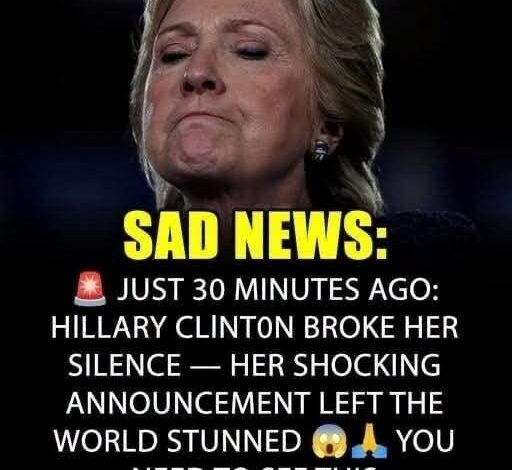
The Facebook post presents Hillary Clinton as having made a recent, unexpected announcement. The linked page is dated August 2025 and never names the announcement. It supplies no date or location for the public address it describes, no recording, and no link to a transcript or statement. Its closing paragraphs pose questions about Clinton’s future instead of identifying a decision she made.
The date in the Facebook teaser is relative to when someone wrote or reposted it. It does not establish when Clinton spoke. The difference matters because the same photograph and wording can circulate long after they first appeared. The publication date on the linked page also cannot tell a reader when the alleged speech occurred. Readers would need a separate date for the event itself.
The article gives Clinton’s former offices and describes what it says was an emotional moment. Neither detail identifies the occasion. Her work as a senator, secretary of state and presidential candidate has produced years of footage that pages can reuse in posts about completely different events. A known photograph of a public figure is evidence of what the image depicts, but the headline attached later still needs its own support.
An announcement about a particular decision usually contains something concrete. A person may name a project they are starting, an event they are attending or a role they are leaving. A statement from a representative can identify the decision and date it. In this instance the article moves from describing a speech to asking what might happen next, without providing the development it promised.
Short quotations also need a source. Words that could be spoken in many settings tell readers little without the sentences around them. A dated video or transcript would make it possible to see the subject of the remark and whether the wording was quoted accurately. An anonymous retelling that supplies neither leaves no reliable way to connect the quotation to Clinton.
The photo and the headline can leave viewers with a strong impression that they missed important news. That is different from being able to identify something that happened. A useful search would start with a named event, campaign, organization or venue. The link supplies none of those details. Another page using the same picture and teaser would repeat the claim without improving its documentation.
A reader who wants to know whether Clinton said something important recently can look for a statement published in her own name or an attributable report that identifies the interview or appearance. The presence of those details would allow readers to check the claim directly. The text attached to this post gives them little to search beyond Clinton’s name and a generic promise of unexpected news.
The material establishes that the claim circulated and that a page put it in the form of a news story. It does not establish what Clinton announced or whether the speech described took place. Until there is a dated, identifiable source, the specific claim in the Facebook caption remains unsupported.