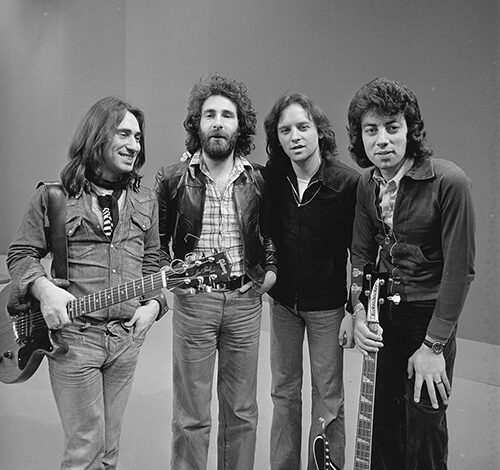
10cc’s ‘I’m Not In Love’: The Whispered Masterpiece That Redefined Love Songs Forever
Released in 1975, it sounded almost like a confession nobody was supposed to hear. Decades later, its quiet heartbreak still lingers long after the music fades.
There are love songs that shout their feelings from the rooftops, and then there are songs that spend four minutes trying desperately to hide them.
Released in 1975, “I’m Not In Love” by 10cc sounded unlike anything else on the radio at the time, floating through the air like a dream that refused to explain itself.
The first notes arrive almost like a whisper from another world, surrounded by layers of voices so soft and mysterious that listeners often feel suspended between reality and memory.
At first glance, the lyrics seem simple enough, telling the story of a man who repeatedly insists that he is not in love despite all evidence pointing in exactly the opposite direction.
Yet the more he denies it, the more obvious the truth becomes, and that contradiction is what gives the song its lasting emotional power.
Many love songs are built on confession, but this one is built on resistance, capturing the strange moment when the heart knows something that the mind refuses to admit.
The narrator tries to sound calm, detached, and completely in control, but every sentence reveals cracks in the emotional wall he has constructed around himself.
He keeps explaining away his feelings with awkward excuses, pretending that photographs, memories, and thoughts of a certain person mean absolutely nothing.
But anyone who has ever fallen deeply in love recognizes the performance immediately because it is the oldest act in the world.
Sometimes the strongest emotions are hidden behind the loudest denials.
That universal truth helped transform “I’m Not In Love” into one of the most unforgettable recordings of the 1970s.
Yet somehow this quiet, almost weightless recording managed to stop listeners in their tracks.
Its atmosphere felt intimate and enormous at the same time, as if someone had opened a diary inside a cathedral.
Part of the song’s magic came from the extraordinary production that sounded decades ahead of its time.
Rather than relying on traditional instruments for many of its textures, the band built enormous vocal layers that drift through the recording like clouds.
The result was a sound both human and supernatural, warm yet distant, familiar yet impossible to fully understand.
Even today, decades later, the recording still feels startlingly modern.
Many listeners discover it for the first time and assume it belongs to a much later era because of its cinematic quality and emotional sophistication.
Yet technology alone cannot explain why the song continues to resonate across generations.
Its real secret lies inside the vulnerability hidden beneath the narrator’s stubborn words.
The character at the center of the song is not confident or heroic.
He is frightened.
Frightened of being exposed.