My Parents Abandoned Me at a Greyhound Station When I Was 8—22 Years Later, They Sued Me for the $3.8 Million Inheritance Left by the Stranger Who Raised Me…
**PART 3**
My father’s face changed.
Not dramatically. Not enough for someone unfamiliar with him to notice.
But I noticed.
His jaw tightened, and his right hand moved toward his tie.
I had seen that gesture before.
I had seen it when I was a little boy and accidentally broke a glass. I had seen it when I asked why we couldn’t visit Grandma. I had seen it when I asked whether he loved me.
It was the gesture he made whenever he knew something was about to go wrong.
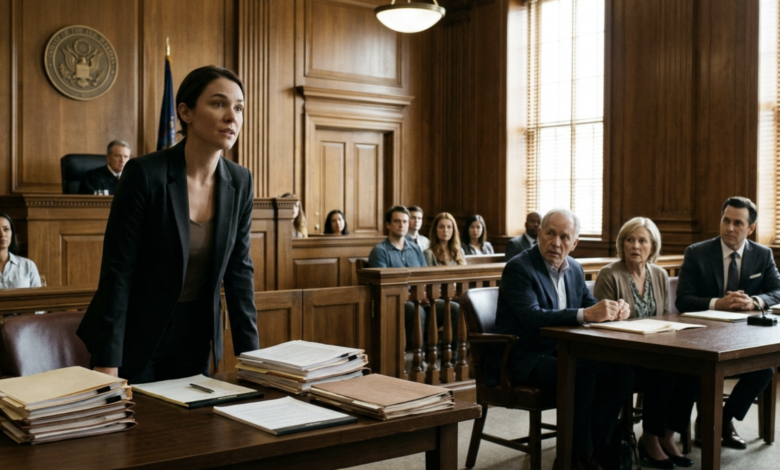
Judge Wynn began reading.
“‘Evelyn believes the arrangement is the only way to get our finances under control. The boy will be difficult to explain, but once he is gone, we can finally start over without another mouth to feed.’”
My mother immediately shook her head.
“That’s not what it means!”
The judge raised one hand.
“Mrs. Marsh, you will have an opportunity to respond. Please allow me to finish.”
I looked at my mother.
For a brief moment, I saw the woman who used to tuck me into bed.
The woman who once kissed my forehead when I had a fever.
The woman whose face I had searched for through the glass doors of a Greyhound station for four endless hours.
Then I remembered the granola bar.
It was still the smallest detail I remembered from that afternoon.
Not the station.
Not the buses.
Not even the cold.
The granola bar.
My mother had given me something to eat before leaving me to die in a place where nobody knew my name.
Judge Wynn continued.
“‘The insurance company has confirmed that the policy will remain active if the child is reported missing. We should avoid any direct contact after the disappearance. Arthur will handle the police statement.’”
The courtroom became completely silent.
Wyatt stopped leaning back.
He sat forward and looked at his parents.
“Mom?” he whispered.
My mother didn’t look at him.
My father finally stood.
“Your Honor, that letter is being taken out of context. It was a private conversation between husband and wife. It has nothing to do with the inheritance.”
Judge Wynn looked over her glasses.
“Mr. Marsh, sit down.”
He sat.
I took a breath.
“Your Honor, I have another document.”
I handed the second binder to the bailiff.
Inside were copies of the insurance application, payment records, correspondence with the insurance company, and the original police report filed the night I disappeared.
The insurance policy was for $62,000.
That might not sound like much compared to the $3.8 million estate they were now fighting over.
But in 1994, it was enough to change a struggling family’s financial situation.
The policy had been taken out eighteen months before my abandonment.
My father had listed himself as the primary beneficiary.
My mother was the secondary beneficiary.
And the most disturbing part was the section describing what would happen if I disappeared.
There was a waiting period.
A process.
A specific set of conditions.
My parents had known exactly what they needed to do.
They had not made a desperate decision on a cold afternoon.
They had prepared for it.
I turned toward the judge.
“The insurance company paid the claim two years after I disappeared. My parents received $62,000. They never contacted the authorities to correct their original statement. They never reported that they knew where I was. They never attempted to locate me.”
My mother began crying.
Not quietly.
She pulled a tissue from her handbag and pressed it against her face.
“Matthew, please.”
I didn’t respond.
“Matthew, honey, we were young. We were struggling. We made mistakes.”
I looked at her.
“You were forty-one years old, Mother.”
She stopped crying for a second.
“You had a house. Two cars. A bank account. You had another child. You had eighteen months to cancel that insurance policy. You had four hours at that bus station to change your mind.”
My voice began to shake.
“But you didn’t.”
My mother lowered her tissue.
“I never stopped loving you.”
For the first time that morning, I almost laughed.
Not because it was funny.
Because there was something so cruel about hearing those words from someone who had never once tried to find out whether I was alive.
“Then why didn’t you come back?”
She opened her mouth.
Nothing came out.
I turned away.
I wasn’t finished.
The third binder contained the investigation into the events that happened after I was abandoned.
And this was where the case became much more complicated.
My private investigator, a woman named Denise Carter, had spent eleven weeks locating records that should have been easy to find but had somehow remained scattered across different agencies.
She had found an old insurance investigator’s report.
A bank statement.
Several letters.
And something that surprised even me.
A second person had been involved in the plan.
My mother had a sister named Lorraine.
I remembered Aunt Lorraine.
She had visited our house a few times when I was little. She wore oversized glasses, smelled like lavender, and always brought cinnamon cookies.
I hadn’t thought about her in decades.
According to the documents, Lorraine had been contacted by my parents shortly before my disappearance.
They had told her I was being sent away to live with relatives.
They had asked her not to interfere.
But Lorraine hadn’t believed them.
She had called the local police station two days after I disappeared and asked whether a missing-child report had been filed.
The answer was yes.
She then contacted my parents.
The conversation was documented in a letter she had kept for years.
She had written:
*Arthur, I know what you did. I know you left that little boy at the station. I know you told everyone he ran away. I don’t care what excuse you have. That child deserves better than this.*
And my father’s response was even worse.
He wrote:
*Stay out of our affairs. If you contact the police again, we will make sure you never see Wyatt.*
I looked toward my younger brother.
Wyatt was staring at the paper.
His face had lost all color.
He slowly turned toward my mother.
“Is this real?”
My mother shook her head.
“Wyatt, don’t listen to him. He’s trying to make us look terrible.”
But Wyatt wasn’t looking at me anymore.
He was looking at the woman who had raised him.
“Did you really leave him?”
She didn’t answer.
“Mom, did you?”
My father leaned toward him.
“Son, this is a legal matter. Don’t get involved.”
Wyatt pulled his arm away.
“Stop telling me what to do!”
The outburst surprised everyone.
Even the judge looked up.
Wyatt stood and walked toward the aisle.
“Your Honor, may I say something?”
The judge studied him.
“Are you a witness in this matter?”
“I’m their son.”
“That doesn’t answer my question.”
Wyatt swallowed.
“I think I might have information that matters.”
My father immediately stood.
“Wyatt, sit down.”
But for once, my brother didn’t obey.
He looked at me.
And I saw something I had never expected to see in his eyes.
Fear.
Not fear of losing money.
Fear of discovering that everything he had believed about his family was a lie.
Judge Wynn called a brief recess.
The attorneys gathered near the bench. My parents remained seated, whispering urgently to each other.
I walked toward the courthouse water fountain.
My hands were trembling.
I hadn’t realized how much energy it would take to say those things aloud.
For twenty-two years, I had imagined confronting my parents.
Sometimes I imagined screaming.
Sometimes I imagined asking why.
Sometimes I imagined walking away without saying anything.
But I had never imagined doing it in a courtroom while strangers watched me explain the worst afternoon of my childhood.
A few minutes later, someone approached.
It was Wyatt.
He stood several feet away.
“Matthew.”
I turned.
He looked uncomfortable.
“Don’t call me that like we’re close.”
He nodded.
“Okay.”
Silence.
Then he said something I wasn’t expecting.
“I didn’t know.”
I stared at him.
“What?”
“I didn’t know they abandoned you.”
I studied his face.
Wyatt was thirty years old. He had grown up in the same house where my parents had raised me for eight years. He had gone to private schools, attended birthday parties, taken family vacations, and received everything I had been denied.
He had never once wondered why he had no older brother.
Or perhaps he had.
“I was told you ran away,” he continued. “Dad said you had behavioral problems. Mom said you were sent to live somewhere else because you were dangerous.”
I felt something cold move through my chest.
“Dangerous?”
He looked down.
“That’s what they told me.”
I wanted to ask him why he had never searched for me.
Why he had never asked for a photograph.
Why he had never wondered what happened to the brother whose bedroom had apparently disappeared from the house.
But then I remembered something.
Wyatt had been six when I was abandoned.
He had been a little boy too.
He hadn’t made those decisions.
“Why are you here, Wyatt?”
He rubbed his palms against his trousers.
“Because yesterday, after we received the investigator’s report, I found something in Dad’s office.”
“What?”
“A box.”
He looked around to make sure our parents weren’t nearby.
“There were letters in it. Old letters. From Aunt Lorraine.”
My heart skipped.
“Do you still have them?”
“I brought copies.”
He reached inside his jacket and pulled out a small envelope.
I recognized the handwriting immediately.
It was Aunt Lorraine’s.
Wyatt handed it to me.
“I think you should read this.”
I opened the envelope.
The letter was dated September 1996.
Two years after I had disappeared.
It began:
*Dear Arthur and Evelyn,*
*I am writing one last time because I cannot keep pretending that what happened to Matthew was acceptable.*
*I know you received the insurance payment. I know because Arthur told me himself that the money helped you settle your debts.*
*But I also know something you do not.*
*The little boy is alive.*
My fingers tightened around the paper.
I read that sentence again.
*The little boy is alive.*
I continued.
*I spoke to a woman who worked with the children at the station that night. She told me Matthew was placed with a temporary family before being taken in by a kind older man. His name is Elijah.*
My breath caught.
Elijah.
My Elijah.
The letter continued.
*I know where he is. I know he is safe. And I know you have not made one attempt to contact him.*
*If you ever decide to become parents again, I hope you remember that a child does not stop being your responsibility simply because you stop seeing him.*
At the bottom was a final sentence.
*I will not protect your secret forever.*
I lowered the paper.
For twenty-two years, I had believed my parents never knew what happened to me after that night.
But they had known.
They had known I was alive.
They had known I was safe.
They had even known the name of the man who raised me.
And they had done nothing.
I looked at Wyatt.
“Where is Aunt Lorraine now?”
He swallowed.
“She died last year.”
My chest tightened.
“Did she leave anything else?”
He nodded.
“There’s something else.”
He handed me another envelope.
This one was addressed to me.
Not to Arthur.
Not to Evelyn.
To Matthew.
My hands began shaking.
I opened it carefully.
Inside was a photograph.
It showed me as a little boy sitting at a kitchen table, wearing a blue sweater and smiling with a missing front tooth.
I remembered that photograph.
I had seen it once in an old family album before everything happened.
On the back, Aunt Lorraine had written:
*Matthew, if this ever reaches you, I hope you know someone in your family never stopped loving you. I am sorry I wasn’t brave enough to save you.*
I couldn’t speak.
For the first time since Elijah’s funeral, I felt tears coming without trying to stop them.
Wyatt stood quietly.
“I know I can’t fix anything,” he said. “But I thought you deserved to know.”
I folded the letter.
“Thank you.”
He nodded.
Then he said something that made me look at him again.
“There’s another reason I came here.”
“What reason?”
He hesitated.
“Mom and Dad aren’t just after the inheritance.”
I waited.
“They’re in serious financial trouble.”
When the hearing resumed, I was no longer thinking only about the $3.8 million.
I was thinking about the insurance money.
The letters.
The years of silence.
And the possibility that my parents had a much larger motive than simply believing they deserved a share of Elijah’s estate.
Judge Wynn took her seat.
“Are we ready to proceed?”
My parents’ attorney stood.
“Yes, Your Honor.”
I stood too.
“Yes, Your Honor.”
The judge looked at me.
“Mr. Marsh, I understand there may be additional evidence.”
“Yes, Your Honor. I would like to introduce the correspondence between the plaintiffs and Mrs. Lorraine Bennett, the mother’s sister, which establishes that they knew I was alive after my disappearance.”
Their attorney objected immediately.
“Your Honor, we question the authenticity and relevance of these documents.”
I nodded.
“That’s understandable. I have the original correspondence, handwriting samples, and a sworn statement from the investigator who recovered them. I am prepared to have them independently examined.”
Judge Wynn reviewed the documents.
“Objection noted. The court will consider admissibility and authenticity before relying on these materials.”
I continued.
“There’s one more matter, Your Honor.”
My father leaned toward his attorney.
I saw him whisper something.
The attorney shook his head.
I handed the bailiff a separate financial report.
“During the investigation, we discovered that the plaintiffs have outstanding judgments and substantial unpaid debts. They are currently facing foreclosure proceedings on their residence.”
My mother’s head snapped up.
“That has nothing to do with this!”
I looked at her.
“Then perhaps you can explain why your attorney requested that the estate be placed under an emergency restriction before the validity of your claim was established.”
Their attorney stood.
“Your Honor, this is improper.”
Judge Wynn looked at him.
“Counsel, sit down. I will decide what is relevant.”
I opened the report.
“Three weeks before filing this lawsuit, my parents attempted to contact the estate administrator. They requested an immediate distribution of funds, despite having no legal authority over the estate. When that request was denied, they filed this lawsuit.”
My father shook his head.
“We were trying to protect our family!”
I turned toward him.
“Which family?”
He stared at me.
“The one you abandoned twenty-two years ago?”
For a moment, nobody moved.
Then Judge Wynn asked the question I had been waiting to hear.
“Mr. Marsh, are you alleging that the plaintiffs brought this action in bad faith and for the purpose of obtaining funds to satisfy their personal debts?”
“Yes, Your Honor.”
“Do you have evidence supporting that allegation?”
I placed another document on the table.
“Yes.”
It was a copy of a recorded telephone conversation between my father and a financial adviser.
The recording had been legally obtained by the adviser and voluntarily provided to my investigator.
I had listened to it three times.
Each time, I felt a little less like the boy waiting at the bus station.
And a little more like the man Elijah had raised me to become.
The judge listened to the recording through the courtroom system.
My father’s voice filled the room.
“We don’t need the whole three million. If we can get even half, we can settle everything.”
The financial adviser asked:
“And if Matthew refuses?”
My father’s response was immediate.
“Then we’ll make him look unstable. We have enough history to convince people he was a problem child.”
My mother could be heard in the background.
“Arthur, don’t say that on the phone.”
Then my father’s voice again.
“He won’t have a choice. He’s still our son.”
The recording ended.
Nobody spoke.
My father looked at the floor.
My mother covered her face.
And Wyatt slowly leaned back in his chair as though the air had been knocked out of him.
Judge Wynn removed her glasses.
“Mr. Marsh, is this recording part of the evidence you intend to submit?”
“Yes, Your Honor, subject to the court’s review of its authenticity and admissibility.”
She nodded.
“Very well. We will take this under advisement.”
I sat down.
For the first time that morning, I felt something approaching relief.
But then my parents’ attorney stood again.
“Your Honor, before the court makes any decision, we have a matter of our own to raise.”
I looked up.
He approached the bench with a thick folder.
“My clients have recently discovered information concerning the late Mr. Elijah Marsh that they believe directly affects the validity of the inheritance.”
My stomach tightened.
“What information?” the judge asked.
The attorney opened the folder.
“Mr. Elijah Marsh had a medical condition during the final months of his life. We have reason to believe that he may not have been mentally competent when he executed his final will.”
I stared at him.
That was impossible.
Elijah had been sharp until the end.
He remembered every chess opening. He could calculate investment returns in his head. He corrected my grammar in birthday cards and still beat me at chess when he was eighty.
The attorney continued.
“We believe the will may have been the result of undue influence exerted by the defendant, who stood to receive the entirety of the estate.”
My mother lowered her tissue.
And I understood.
They weren’t finished.
They were trying to destroy Elijah’s final decision because they couldn’t find a legal way to take the money from me.
I stood.
“Your Honor, I anticipated this allegation.”
I reached into my briefcase and removed one final folder.
“But before we discuss Mr. Marsh’s medical condition, I would like the court to review the independent psychiatric evaluation completed six months before his death, the two witness affidavits, and the video recording of the will execution.”
Their attorney blinked.
I continued.
“Elijah knew exactly what he was doing. He had independent legal counsel. He had two witnesses. And he explained his decision in his own words.”
Judge Wynn looked at the folder.
“Is there a recording?”
“Yes, Your Honor.”
“Have you provided a copy to opposing counsel?”
“I have.”
The judge nodded.
“Then I will review it.”
My mother suddenly leaned toward her attorney and whispered something urgently.
He shook his head.
But she wasn’t finished.
She stood.
“Your Honor, there’s something else you should know.”
The judge looked at her.
“Mrs. Marsh, you need to remain seated unless I give you permission to speak.”
My mother ignored the warning.
“Elijah Marsh wasn’t the innocent man Matthew makes him out to be!”
My heart stopped.
She looked directly at me.
“He had secrets too.”
I felt my stomach tighten.
“What secrets?” I asked.
Her eyes filled with tears.
“He knew about the insurance money. He knew what we did. And he threatened us.”
The courtroom erupted in whispers.
Judge Wynn struck her gavel.
“Order!”
I stared at my mother.
“What are you talking about?”
She looked at me with an expression I couldn’t understand.
Fear.
Anger.
And something that almost resembled satisfaction.
“Elijah didn’t just find you by accident, Matthew.”
My mouth went dry.
She continued.
“He knew who you were. He knew who your parents were. And he had been watching our family long before you ever met him.”
I looked toward the judge.
Then toward my father’s table.
My father had gone completely pale.
Because he knew something.
Something he hadn’t expected her to say.
Judge Wynn ordered everyone to remain seated.
“Mr. Marsh,” she said carefully, “do you have any knowledge of what Mrs. Marsh is referring to?”
I shook my head.
“No, Your Honor.”
My mother slowly reached into her handbag.
She removed a folded piece of paper.
“I have proof.”
My father’s attorney immediately grabbed her arm.
“Evelyn, don’t.”
But she pulled away.
“It’s time he knows the truth.”
She placed the paper on the table.
It was an old photograph.
And when the bailiff carried it toward the judge, I saw the image clearly.
It showed my eight-year-old self standing outside the Greyhound station.
Beside me was Elijah.
But that wasn’t what made my blood run cold.
It was the date written on the back.
February 14, 1994.
The exact day my parents abandoned me.
And underneath the date were six handwritten words:
*“He was supposed to take him.”*
I looked at my mother.
Then at my father.
And for the first time that morning, I wasn’t certain I understood the story of my own life.
Because if Elijah had been waiting for me that night…
Who had he really been waiting to save me from?
And why had my parents spent twenty-two years pretending they had never known him?
**PART 4**
For several seconds, I couldn’t move.
The photograph lay on the judge’s desk.
My eight-year-old face stared back at me from the paper. I was wearing the same blue coat I remembered wearing that February afternoon. My hair was messy, my cheeks were red from the cold, and I was holding the little granola bar my mother had given me.
But Elijah was standing beside me.
Not inside the station.
Not approaching me after the police arrived.
He was there before my parents left.
And the words written on the back of the photograph kept repeating in my head.
*He was supposed to take him.*
I turned toward my mother.
“What does that mean?”
She wouldn’t look at me.
“Mother, I’m asking you a question.”
My father suddenly stood.
“That’s enough, Evelyn. You’ve said too much.”
Judge Patricia Wynn struck her gavel.
“Mr. Marsh, sit down. Mrs. Marsh, I want you to explain the photograph. Who wrote those words?”
My mother swallowed.
“Arthur did.”
Everyone turned toward my father.
He looked furious.
“She’s lying.”
“Then tell us the truth,” I said.
He glared at me.
“You have no idea what happened back then.”
“You’re right. I was eight years old. You were supposed to be the adult.”
He clenched his fists.
Judge Wynn instructed him to remain seated.
Then my mother began speaking.
And what she revealed changed everything I thought I knew about the man who had raised me.
Twenty-two years earlier, Arthur Marsh had been drowning in debt.
He had invested in a small construction business that failed after several major contracts collapsed. He had borrowed money from private lenders, used credit cards to cover payroll, and eventually began selling family possessions to keep creditors away.
My mother said they were desperate.
They had received several threatening letters.
They were afraid of losing their house.
And then Arthur met Elijah Marsh.
Elijah was not a stranger to my biological parents.
He was my father’s distant cousin.
They shared a family connection through Arthur’s grandfather, although they had not spoken regularly in years.
Elijah was older, financially successful, and had spent most of his adult life building a business portfolio.
He had never married.
He had no biological children.
And according to my mother, he had been looking for someone to leave his estate to.
Arthur knew about Elijah’s wealth.
He also knew Elijah had a particular interest in helping children who had been abandoned or neglected.
So my father approached him.
He told Elijah that he and Evelyn were struggling financially and asked whether he could help them.
Elijah refused to give Arthur money directly.
Instead, he offered something different.
He said he would help pay for my education and provide financial support if my parents agreed to raise me properly.
My mother said they accepted.
But Arthur wanted more.
He wanted access to Elijah’s money immediately.
When Elijah refused, my father became angry.
He began telling people that Elijah was trying to interfere with his family.
Eventually, Arthur came up with a different plan.
He told Elijah that he and Evelyn were considering sending me away to live with relatives because they could no longer afford to care for me.
Elijah believed him.
He agreed to meet them at the Greyhound station.
He thought they were bringing me there so he could take me temporarily while my parents resolved their financial problems.
But Arthur had another plan.
He had already arranged the insurance policy.
He intended to abandon me, collect the insurance payment, and tell everyone I had run away.
My mother looked at the photograph again.
“Elijah was supposed to take you that day,” she whispered. “Arthur was supposed to hand you over to him.”
I stared at her.
“Then why didn’t he?”
She began crying.
“Because your father changed his mind.”
My father shook his head.
“That’s not what happened.”
My mother continued.
“Arthur said Elijah was trying to take control of everything. He said if we gave you to him, we would lose our chance to get the money.”
I felt sick.
“So you left me there?”
My mother covered her mouth.
“Yes.”
The word was barely audible.
But it was enough.
I turned toward my father.
“And you?”
He stared at the table.
“You had an opportunity to give me to someone who wanted to care for me. Instead, you left me alone at a bus station.”
Arthur finally spoke.
“Elijah had no right to interfere with my family.”
I looked at him.
“He wasn’t interfering. He was trying to save your son.”
For the first time, my father had no response.
Judge Wynn ordered the hearing suspended while the court reviewed the new allegations.
The photograph was admitted for further authentication, and the judge instructed both sides to submit additional evidence concerning Elijah’s involvement.
My parents’ attorney looked increasingly uncomfortable.
He had entered that courtroom expecting a straightforward inheritance dispute.
Now he was watching his clients become the center of a possible criminal investigation.
But I wasn’t finished.
I still had one question.
Why had Elijah never told me?
Why had he allowed me to believe our meeting was an accident?
Why had he never explained that he had been connected to my biological parents?
I had spent twenty-two years loving him.
I thought I knew everything about him.
Apparently, I didn’t.
That evening, I returned to the house in Centerville.
The house was quiet.
Elijah’s reading glasses were still on the little table beside his favorite chair. His chessboard remained on the wooden coffee table. A half-finished book was lying open beside the window.
I stood in the doorway for a long time.
Then I walked into his study.
I opened the desk drawers.
I checked the filing cabinets.
I searched through the old photographs.
Nothing.
Finally, I remembered something.
Elijah had once told me that he kept the things he valued most in a small locked cabinet behind the bookshelves.
I had never asked what was inside.
I moved the books aside and found the cabinet.
The key was still taped underneath the lowest shelf.
Inside were several envelopes, a small leather notebook, and an old photograph album.
I opened the notebook.
The first page contained a date.
February 14, 1994.
My birthday was not that day.
It was the date I had been abandoned.
Below the date, Elijah had written:
*I arrived at the station at 4:10 p.m. Arthur and Evelyn were supposed to bring Matthew to me. They never came back. I waited until the police arrived. When I learned what had happened, I knew I could not allow that child to grow up believing nobody wanted him.*
I turned the page.
There were more entries.
*February 18, 1994: I spoke with the social worker. Matthew is frightened. He still believes his parents will return.*
*March 3, 1994: He asked whether I had seen his mother. I told him I hadn’t. I wanted to tell him the truth, but he is only eight years old.*
*April 20, 1994: Matthew finally laughed today. We played chess for almost two hours. He beat me at the end, although I suspect I let him win.*
I smiled through my tears.
That sounded like Elijah.
I kept reading.