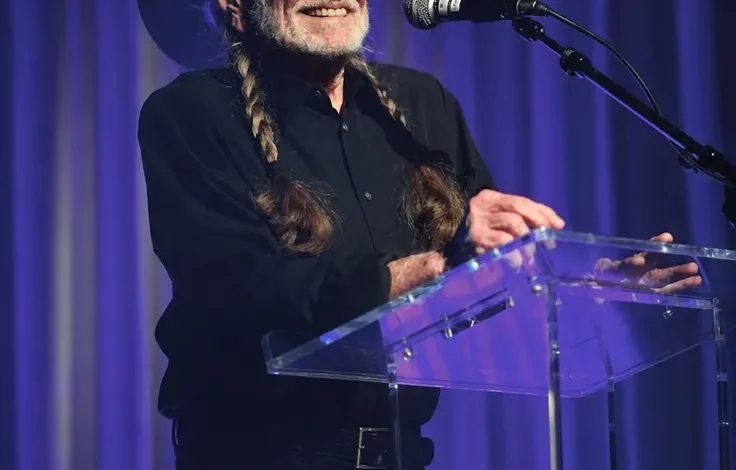
The Song That Perfectly Captured The Awkward Pain Of Seeing An Old Love Again
When Willie Nelson wrote “Funny How Time Slips Away” in the early 1960s, he was still an unknown songwriter trying to make a name for himself in Nashville. Few could have imagined that this quiet ballad would become one of the most recorded country songs in history. More than sixty years later, it remains one of the finest examples of songwriting ever put to paper—a conversation so believable that listeners often feel like they’re eavesdropping on two former lovers meeting again after years apart.
Unlike many heartbreak songs, “Funny How Time Slips Away” doesn’t focus on the breakup itself. Instead, it begins long after the relationship has ended. Two people unexpectedly cross paths and exchange polite conversation. They ask how life has been. They smile. They pretend they’re doing just fine. But beneath every word lies something much deeper. Regret. Curiosity. Lingering affection. The things neither of them is brave enough to say aloud.
That emotional restraint became the song’s greatest strength.
Willie Nelson understood that heartbreak isn’t always dramatic. Sometimes the deepest pain comes from the words left unspoken. Rather than filling the lyrics with tears or accusations, he allowed silence to carry much of the emotion. Listeners instinctively filled in the blanks with memories from their own lives.
Although Nelson wrote the song, the first major hit version was recorded by Billy Walker in 1961. It quickly climbed the country charts and established Willie Nelson as one of Nashville’s brightest songwriting talents. Before long, artists from nearly every genre wanted to record it. Elvis Presley, Al Green, Glen Campbell, Jerry Lee Lewis, Brenda Lee, Perry Como, and countless others eventually released their own interpretations, each discovering something uniquely personal within the lyrics.
Yet no matter who sang it, the story remained universal.
Almost everyone eventually experiences that unexpected reunion with someone they once loved. Maybe it’s at a grocery store, a class reunion, a church service, or simply by chance walking down the street. In those brief moments, years of memories rush back all at once. The conversation remains polite, but the emotions beneath it are impossible to ignore.
Musically, the song reflects the elegance of classic country songwriting.
Its gentle melody never competes with the lyrics. Soft piano, understated steel guitar, and subtle accompaniment create an intimate atmosphere, allowing the listener to focus entirely on the story unfolding. Every pause feels intentional. Every line lands with quiet emotional weight.
As the decades passed, “Funny How Time Slips Away” became one of the defining standards of American popular music. It crossed effortlessly between country, soul, jazz, and pop because its emotional truth belonged to everyone. Great songs often survive because they’re timeless. This one survived because it felt honest.
The song also helped launch Willie Nelson’s remarkable career as a songwriter. Long before he became the legendary performer recognized around the world, he was quietly writing songs that other artists turned into classics. Alongside “Crazy,” “Night Life,” and “Hello Walls,” this composition proved that Nelson possessed a rare gift for expressing complicated emotions through remarkably simple words.
Today, more than six decades after it was written, the song continues finding new audiences. Younger listeners appreciate its storytelling, while older generations often hear pieces of their own lives reflected in every verse. That’s the mark of truly exceptional songwriting.
Because eventually…
time really does slip away.
People change.
Lives move forward.
But every once in a while…
one familiar face reminds us that some memories never truly leave.
That’s why “Funny How Time Slips Away” remains one of the greatest songs ever written—not because it’s about the past, but because almost everyone carries a piece of that past with them forever.
Listen to the full song here:
Credits: KilerClam